 Quasar
Project management written for agents, governed for people.
Most tools let an agent do whatever the API allows. Quasar decides what an agent may do, insists it shows its work, and records who is answerable for it.
The problem
An agent can already write the code, open the issue and close it. What it cannot do is prove that what it changed is still what it analysed — or that it analysed anything at all.
The gap is not intelligence, it is bookkeeping. Nothing in an ordinary tracker distinguishes an issue moved after reading the code from an issue moved because the status was in the way.
What the tool insists on
An analysis, checked against the code
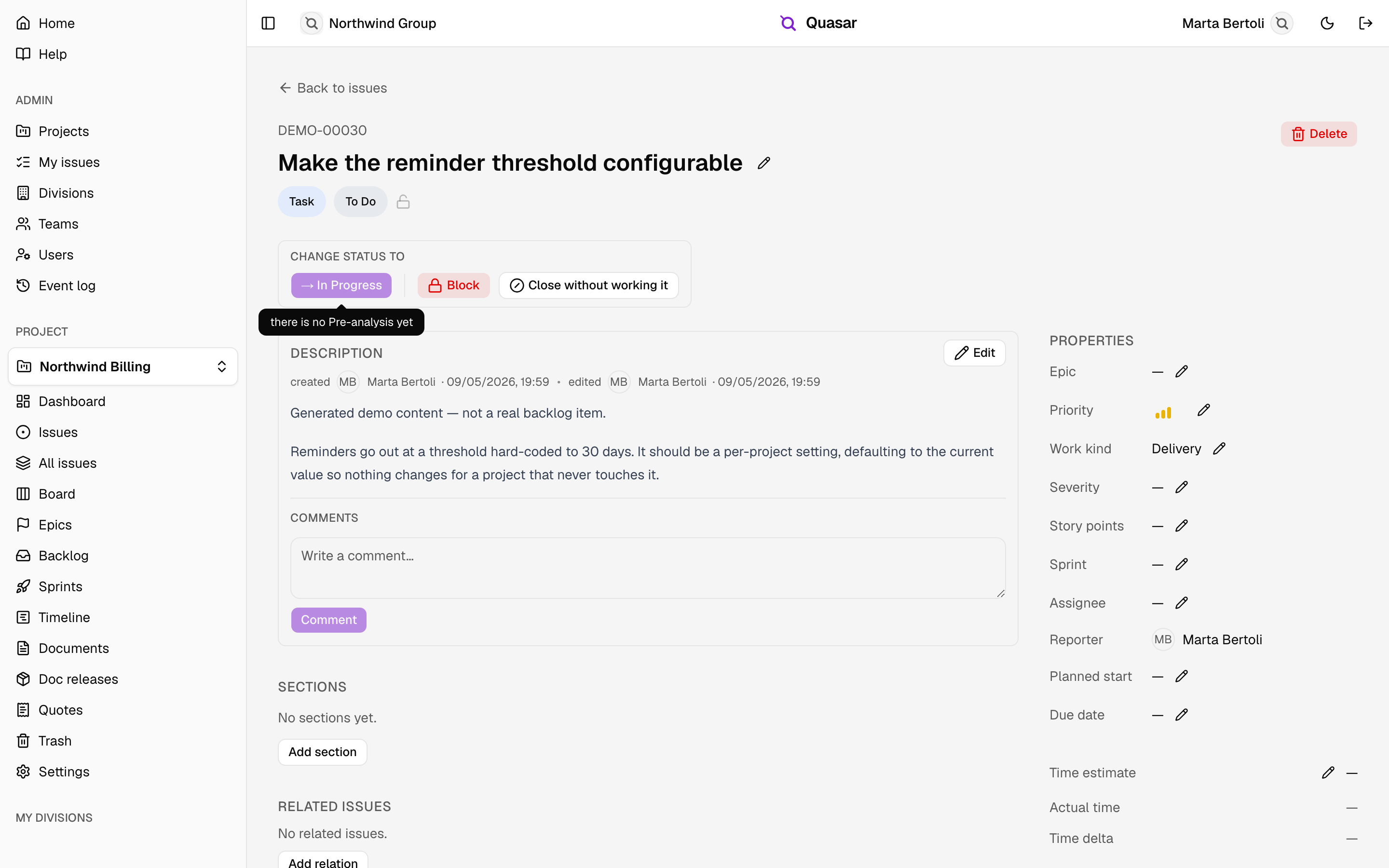
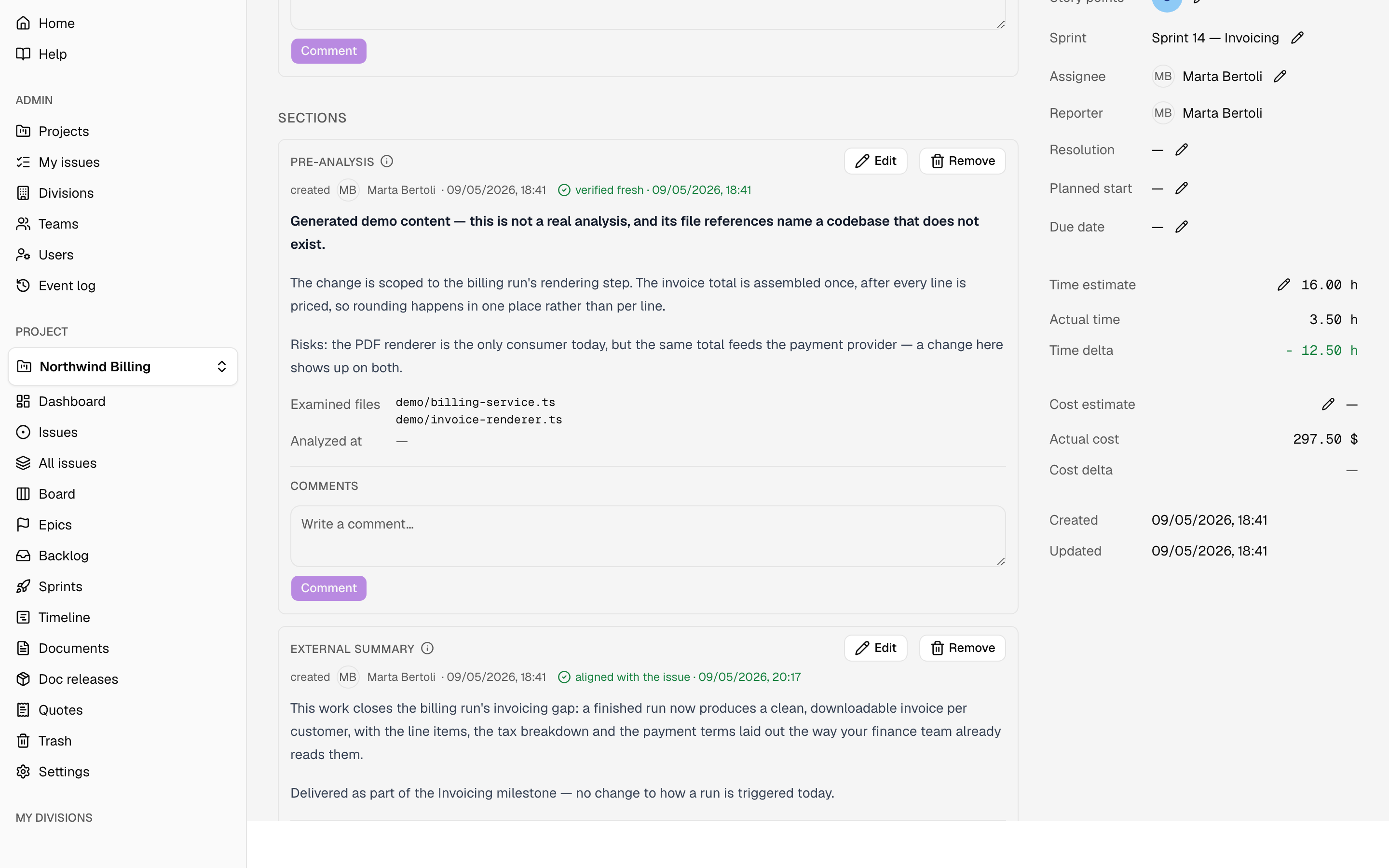
Before work starts, the issue carries a pre-analysis listing every file read with its hash. Quasar re-checks them: if the code moved, the verdict is stale and the work does not begin on an analysis that no longer describes it.
Sessions, not estimates
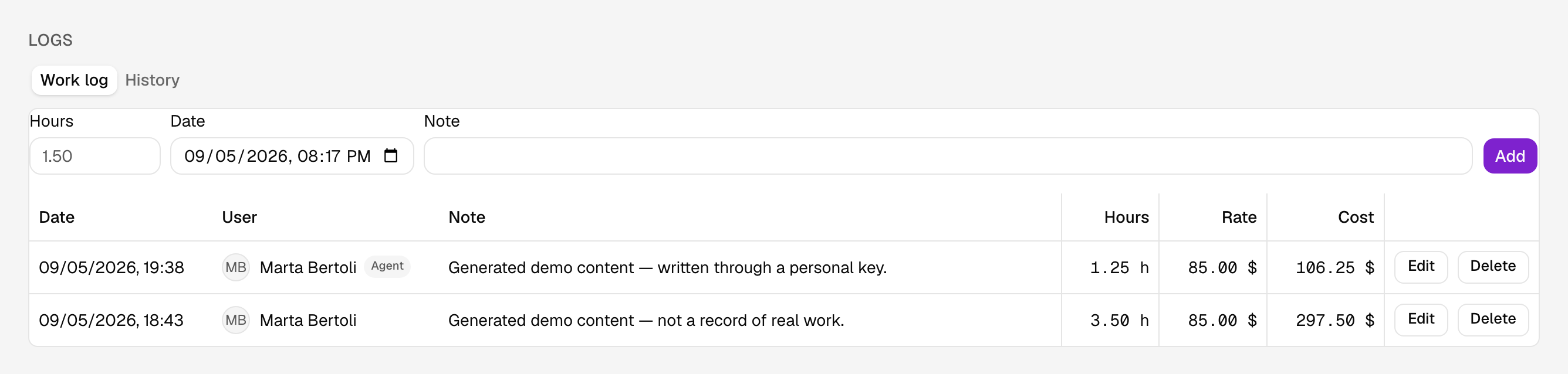
Work is bracketed by sessions Quasar timestamps with its own clock. An agent never states how long something took, and nothing becomes a work log until a person confirms it.
Closing costs something
Done requires a resolution and confirmed hours. The checklist is the project's own definition of done, not a decoration.
One name on every write
Everything is recorded under the human whose key was used, and Quasar separately notes that an agent produced it. Neither is declared by the agent — both come from the credential.
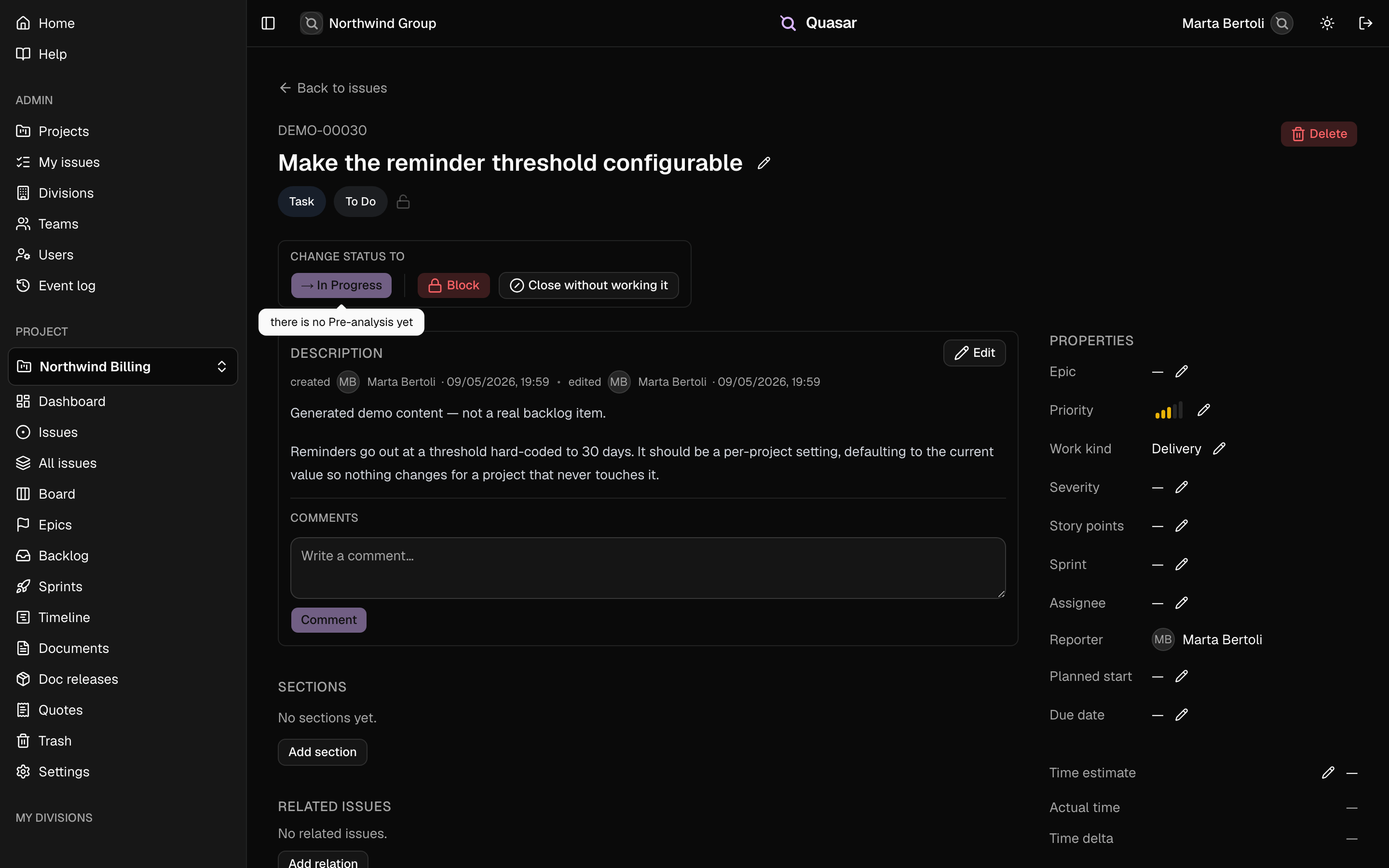
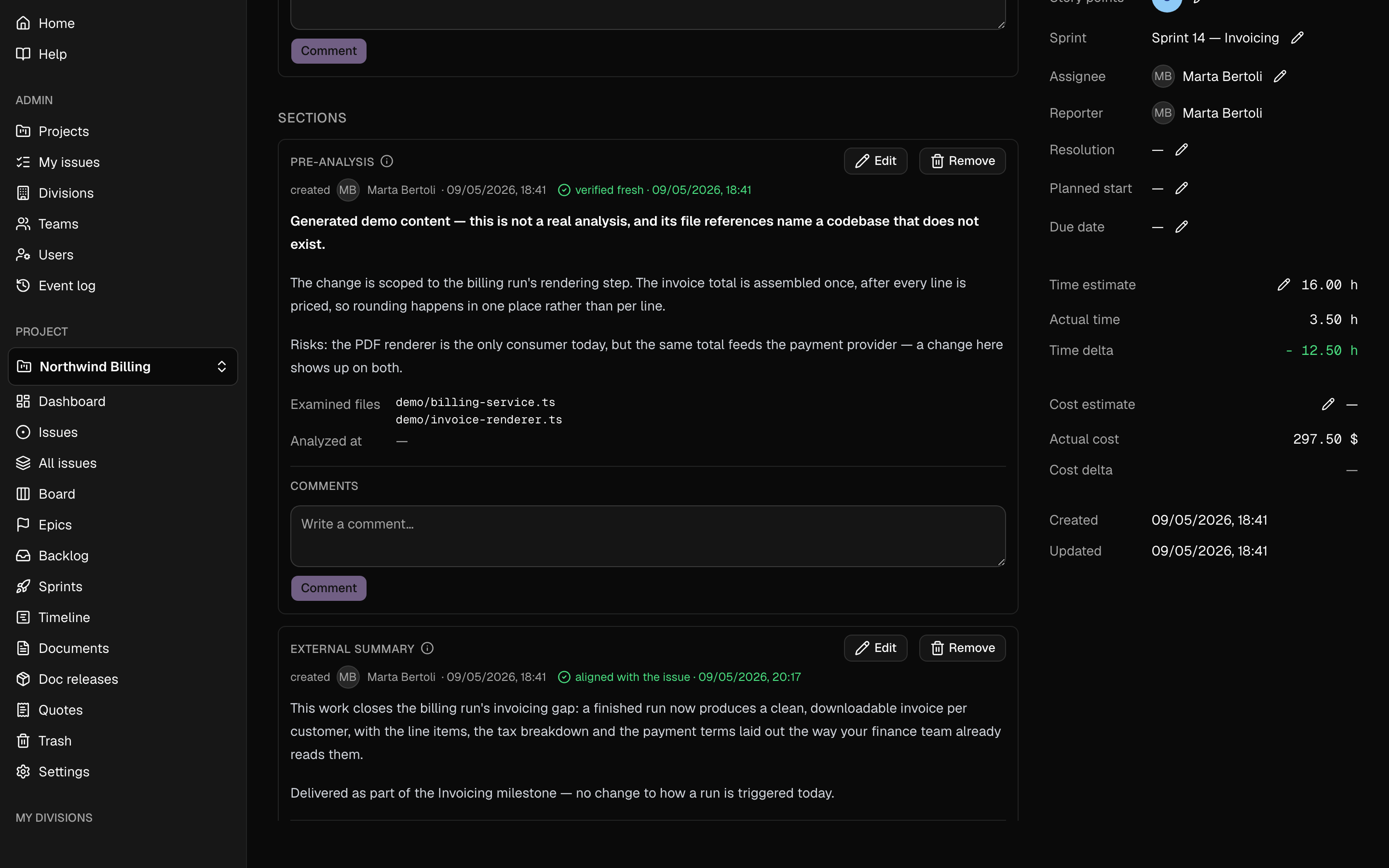
The product at work
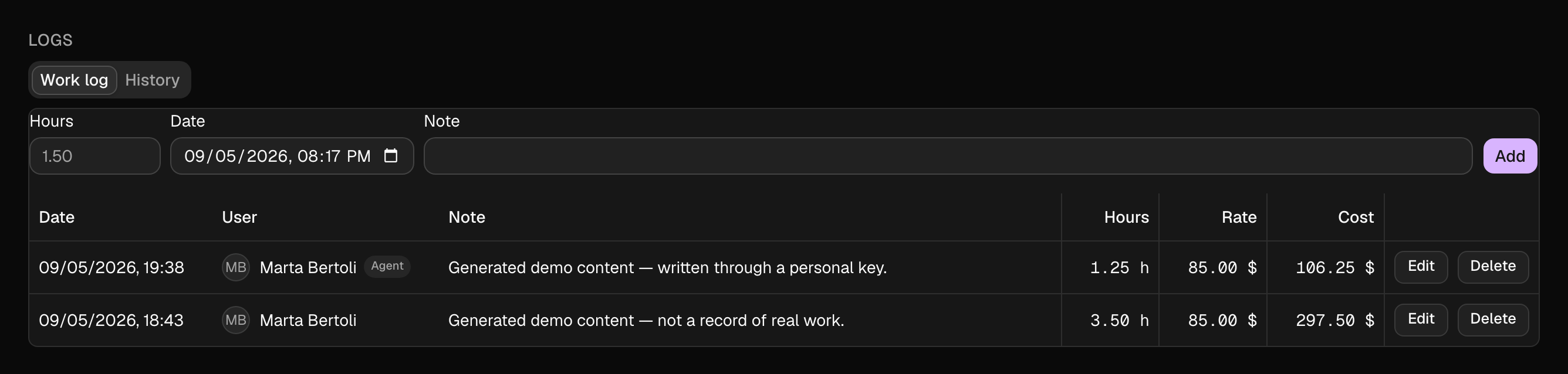
The data in these screenshots is generated demo content, in a tenant that exists for the purpose — a client's work never ends up in a picture. The interface is the product as it ships.
Who it is for
- Teams where agents already touch the codebase, and nobody can reconstruct what they did.
- Studios and consultancies that have to account for hours and decisions to someone else.
- Regulated work, where the question is never what the code does but who decided it, when, and on what basis.
How it is used
Your agent connects over MCP with a key that belongs to a person. Quasar tells it the workflow it must follow, and refuses the calls that break it.
You watch from the other side: statuses, analyses, sessions to confirm, and a work log that adds up.
What it costs
One user is free — not a trial, a plan. Beyond that it is a monthly subscription per product, priced in seat bands. Seats count people: an agent has no existence without a user behind it.
Bring an agent into a project that keeps its own record.